

Journey

Journey
Pete Malinowski and the Billion Oyster Project
It’s a special thing when you get the chance to speak with someone that earnestly believes we can change the world for the better. Pete Malinowski, co-founder of the Billion Oyster Project, a New York City–based nonprofit working to restore oyster reefs to New York Harbor by rebuilding a billion live oysters by 2035, is one such person. An educator who grew up on an oyster farm on a small island not far from the city, sure, Pete’s an optimist—but he’s not unrealistic, let alone delusional. He doesn’t just hope for change, he gets folks involved and produces concrete results.
“You put an oyster reef down and come back in only a matter of weeks, and that same piece of New York Harbor where you couldn't see any animals is now swarming with all kinds of different things,” he explains. “It just goes to show that all the ingredients are still there for these abundant natural systems if we're able to put the one thing back that they all really need.”
While Pete and the Billion Oyster Project have literally led tens of thousands of young people to the water’s edge working to improve NYC’s water quality, strengthening its coastal resilience, and educating students through hands-on environmental science, he also knows our collective impact reaches beyond the world’s estuaries.
“No matter who you are, you can help minimize your negative impact and restore nature where you live.”
We caught up with Pete recently to discover more about his fascinating project, and just what all the fuss is about when it comes to oysters.

So, why do we need oysters so much? What makes them so important?
Pete Malinowski: Oysters are ecosystem engineers. It's the same reason we want coral in the ocean or trees in a forest. They filter water, provide food and habitat for other animals, and they build these big three-dimensional reefs that were historically a critically important part of the environment in New York City and coastal estuaries all over the world.
Whoa. And, what got you interested in restoring oyster reefs in the first place?
I actually grew up on an oyster farm. So, working on the farm was part of growing up for me and my brothers and sisters. When I moved to New York City, I met Murray Fisher, who had started a public high school based on New York Harbor, and we talked about whether we could use my oyster farming background and his educational background to build something that allowed Harbor School students to restore oyster reefs. Growing up, I was not a very successful student, but I really loved all the learning that happened on the oyster farm. The idea of providing that same opportunity to other young people was and still is super exciting.

That makes sense. Is there any particular benefit oysters bring that could really help New York or different ecosystems?
Definitely. The one we're most excited about is oysters' ability to support biodiversity and animal abundance. Estuaries—where rivers meet the sea—are the most productive ecosystems on the planet, and oyster reefs are critical habitat there. A ton of the biomass that ends up in the ocean spends part of its life in estuaries, so oyster reefs have a really outsized impact.
New York City is similar to a lot of places in that the really important coastal estuary that used to fill the Atlantic Ocean with fish is now home to the city. So many giant coastal cities are built on what used to be dynamic natural places. We have a tendency to look far away for important ecosystems to preserve and overlook that the most important ones are where we all are right now.

When you're rebuilding these oyster reefs, do you see any marine life come back?
Yeah, it's really exciting, and it’s sort of an immediate signal that we can observe at all of our reef sites. Put an oyster reef down and come back in only a matter of weeks, and that same piece of New York Harbor where you couldn't see any animals is now swarming with all kinds of different things. It just goes to show that all the ingredients are still there for these abundant natural systems if we're able to put the one thing back that they all really need.

What's it been like helping New Yorkers form a positive connection with the sea?
It's super exciting. I think it's more common in New York City to see nature as something that exists outside of the city that you have to travel to. So, showing literally hundreds of thousands of New Yorkers the animal life that exists in New York Harbor, how cool it is to be on a small boat going past the Manhattan skyline, how quickly you can find wildlife you never thought existed—it really resonates with a lot of people. It changes your perspective when you spend some time on the water.
Talk to me about your own relationship with the ocean. You grew up on the water, right?
I grew up on a tiny island east of Long Island called Fishers Island. It's a really small, rural, year-round community. Going to town meant taking a small boat from Fishers Island across Fishers Island Sound to Connecticut; basically, a five-mile trip. But that trip felt like my driveway. I felt responsible to that piece of water. The most exciting part of my job is watching school-aged kids in New York go from seeing the water as something to be feared, to seeing it as something that belongs to them, that's full of animals, and that they have a responsibility for.

Amazing. Any other particularly proud moments that stick out over the course of this project?
In the last year, we've really transitioned from the learning phase to the scaling phase. Through monitoring reef sites over the last decade, we have a really good idea of the direct benefits. We know larger oyster reefs have a much greater chance of success. We're taking all those lessons and pivoting to do this at a much larger scale. That same growing is happening with our education programs, too. We're trying to go from 100 schools to 1,000 schools in the next couple years. We want teaching and learning about oysters and New York Harbor to be part of what it means to go to school in New York City.

Wow. Incredible. What can folks do to help, whether it's Billion Oyster Project or just in general?
One of the most important lessons is that everything helps, and anyone can help. It's really easy to get discouraged and apathetic in the face of these global environmental challenges, but the reality is that until everyone understands that the decisions they make each day matter, it's always going to seem too big. No matter who you are, you can help minimize your negative impact and restore nature where you live.
Here in New York, we're always looking for volunteers on Governors Island. We want teachers and students to know we're expanding our education programs. If you like eating oysters, ask your restaurant if they're participating in our shell collection program and thank them if they are, or encourage them to join.

Talk to me about getting that message across. When it comes to environmental and conservation issues, it’s easy to slip into doom and gloom…
Right. Doom and gloom messaging is not working; that's an observable fact. It's been the primary tool for four decades around climate change, and it hasn't been an effective motivator. There's a lot of bad news about the state of the planet, but there's also a lot of good news. Getting more people to understand that they have the power to help effect positive change, and that it can be fun and joyful and exciting—that's a much more powerful tool. We love bringing people together, love a good oyster party or shoreline cleanup. Getting people out on boats to enjoy the sunset is incredibly important. Keep it fun and meaningful.
Love that. So, when you hear the phrase Find Your Outerknown, what does that mean to you, personally?
For me, it's getting to share experiences with my children. Watching them kind of absorb how important it is to be outside and have a positive impact—that's the most exciting thing. That’s finding my Outerknown. Then, also just discovering New York City as this really cool natural resource. There's more wading bird species in New York City than just about anywhere else on the east coast. Who knew that? So, getting to find these relatively unknown places that are just really cool natural sites, and showing that to other people—I guess that's my Outerknown right now.

Well said, Pete. Any Outerknown pieces you've been stoked on, lately?
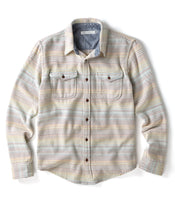
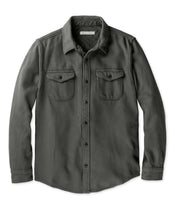
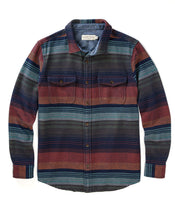
I've always been a jeans, t-shirt, and a flannel kind of person. I really like having a uniform that works in multiple settings, and I definitely find that a lot of the Outerknown clothes do that. So, their Sojourn tees and the Blanket Shirt—they definitely work everywhere and look super sharp.
Watch more on BOP’s YouTube channel.